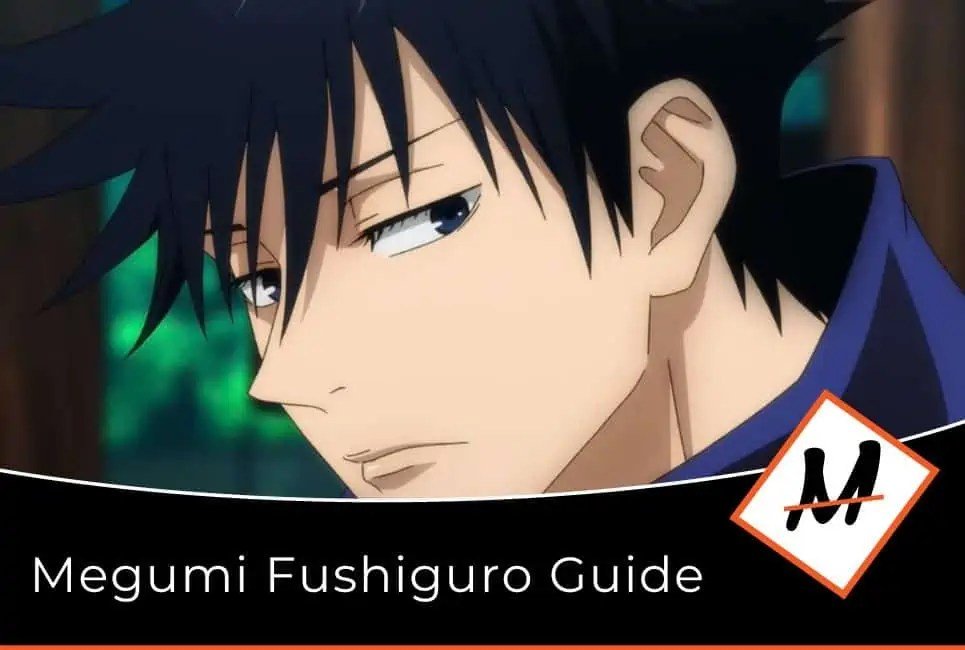
The anime world is vast, filled with intense battles, deep emotional arcs, and characters who leave an indelible mark. Then there's Gintama, a series that takes all those conventions, chews them up, and spits them out in a riotous spectacle of parody and absurd comedy. So, when the idea of a serious, brooding character like Megumi Fushiguro from Jujutsu Kaisen somehow landing in the chaotic world of Gintoki Sakata emerges, it sparks immediate intrigue and, more importantly, immense comedic potential. While not a canonical event in either series, this imagined crossover has captured the imaginations of fans, highlighting Gintama's unique ability to integrate any character into its madcap universe for a laugh.
This super pillar hub is your definitive guide to understanding the theoretical hilarity, character dynamics, and sheer comedic genius that arises when the stoic Megumi Fushiguro is dropped into the perpetually crumbling Edo period. We'll explore his origins, Gintama's parody mastery, and the side-splitting scenarios that would undoubtedly unfold.
Unpacking Megumi Fushiguro: A Sorcerer's Core for Comedy
Before we can appreciate the humor of Megumi's potential Gintama debut, we first need to grasp the essence of his character in Jujutsu Kaisen. Megumi is far from a joke; he's a highly capable Grade 2 Jujutsu Sorcerer from the prestigious Zenin clan, burdened by a complex family legacy and a deeply serious demeanor. His strategic mind, formidable combat skills, and his unique Ten Shadows Technique make him a cornerstone of the Jujutsu High trio alongside Yuji Itadori and Nobara Kugisaki.
He's a character defined by his desire to protect good people, even at the cost of himself, and his emotional journey is marked by significant personal loss and a constant internal struggle. His potential is immense, recognized by figures like Satoru Gojo and Ryomen Sukuna, who both believe he could surpass Gojo himself. Understanding this foundation is crucial because it's precisely this earnestness and seriousness that Gintama would delight in subverting. If you're eager to [delve deeper into Megumi Fushiguro's essential background from Jujutsu Kaisen](placeholder_link slug="megumi_jujutsu_kaisen_basics" text="delve deeper into Megumi Fushiguro's essential background from Jujutsu Kaisen"), our dedicated guide breaks down his powers, personality, and pivotal moments in the original series.
Megumi's combat style is dominated by his inherited Ten Shadows Technique, allowing him to manifest powerful Shikigami from shadows. From the tracking Divine Dogs to the aerial Nue, the evasive Rabbit Escape, or the devastating Max Elephant, each Shikigami brings unique abilities to the battlefield. He can even utilize an incomplete Domain Expansion, Chimera Shadow Garden, to overwhelm opponents with an army of shadow constructs. These abilities, while fearsome in Jujutsu Kaisen, present a treasure trove of possibilities for Gintama's brand of humor.
Gintama's Masterclass in Parody: Why Crossovers Work
Gintama isn't just an anime; it's a cultural phenomenon renowned for its meta-commentary, breaking the fourth wall, and unashamedly parodying virtually every popular anime, manga, and cultural reference imaginable. No franchise is safe from its comedic gaze, from Dragon Ball to One Piece, Fist of the North Star, and beyond. This fearless approach to comedy is precisely why the concept of "Megumi Fushiguro in Gintama" isn't just wishful thinking but a perfectly plausible (albeit unofficial) comedic scenario.
The series thrives on juxtaposing serious dramatic moments with sudden, jarring absurdity, often using character archetypes from other shows to highlight its own unique brand of humor. Its characters are fully aware they are in an anime, making self-referential jokes and commenting on production values or plot holes. This environment creates a fertile ground for crossovers, as Gintama effortlessly absorbs foreign elements and twists them into something uniquely its own. To truly [explore Gintama's long history of hilarious parodies and crossovers](placeholder_link slug="gintama_parody_masterclass" text="explore Gintama's long history of hilarious parodies and crossovers"), we have a comprehensive look at how this anime became the undisputed king of comedic homage.
The Comedic Clash: Megumi's Seriousness Meets Gintama's Absurdity
The heart of "Megumi Fushiguro in Gintama explained" lies in the hilarious friction created by his stoic, pragmatic personality clashing with the sheer, unadulterated chaos of the Yorozuya's daily life. Megumi is used to life-or-death stakes, cursed spirits, and complex tactical battles. Imagine his reaction to Gintoki's nonchalant laziness, Kagura's destructive antics, or Shinpachi's constant, exasperated remonstrations. He'd be a straight man par excellence, his serious observations and logical deductions constantly undermined by the illogical reality around him.
Picture him trying to use his tactical mind to navigate a ridiculously mundane problem, like Gintoki's struggle to pay rent or Kagura trying to win a discounted snack. His earnest attempts to bring order to their lives would be met with bewildered stares or, worse, dragged into their latest hare-brained scheme. The comedy would stem from his inability to process the casual disregard for common sense, the constant breaking of the fourth wall, and the sheer audacity of the Gintama cast. For a deeper dive into the specific comedic opportunities, you'll want to [unravel the comedic gold born from the clash of Megumi's grim reality with Gintama's chaotic world](placeholder_link slug="clash_of_worlds_comedy" text="unravel the comedic gold born from the clash of Megumi's grim reality with Gintama's chaotic world").
Ten Shadows, Ten Thousand Laughs: Twisting Megumi's Abilities
Megumi's Ten Shadows Technique, a hallmark of his power, provides an endless well of comedic possibilities in Gintama. His Shikigami, fearsome and effective against curses, would inevitably be repurposed for the most mundane, absurd, or humiliating tasks imaginable.
Consider the following scenarios:
- Divine Dogs: Instead of tracking curses, they're used to find Gintoki's lost Shonen Jump issue, or perhaps to retrieve a dropped parfait spoon from a hard-to-reach place. Imagine them tracking a particularly elusive cat.
- Nue: This flying Shikigami, perfect for reconnaissance, might become Gintoki's personal delivery drone for sugary treats, or perhaps be forced to act as a spotlight for a ridiculous street performance.
- Max Elephant: A massive Shikigami that consumes vast amounts of cursed energy, its water attacks could be used to clean Gintoki's notoriously messy apartment, or perhaps to settle a silly water balloon fight between Kagura and Okita. The sheer waste of powerful ability for trivial tasks would be peak Gintama.
- Rabbit Escape: Instead of creating a diversion for escape, a swarm of adorable (but easily distracted) rabbits could be summoned to win a children's game, or accidentally cause more chaos than they prevent in a busy street market.
The ultimate irony would be Megumi summoning the unconquerable Mahoraga for something utterly trivial, only for it to adapt to, say, Gintoki's legendary sugar intake or Hasegawa's perpetually unlucky aura. To [see how Megumi's iconic Ten Shadows Technique could be hilariously reinterpreted in Gintama](placeholder_link slug="ten_shadows_gintama_twist" text="see how Megumi's iconic Ten Shadows Technique could be hilariously reinterpreted in Gintama"), check out our in-depth analysis of how his powers would fare in a comedic setting.
Character Dynamics: Megumi's Interactions with the Gintama Cast
The real magic of any Gintama crossover lies in the interactions between the guest character and the main cast. Megumi's reserved nature would bounce off Gintoki's cynicism, Kagura's bluntness, and Shinpachi's everyman frustrations in endlessly amusing ways.
- Gintoki: Megumi would likely be utterly bewildered by Gintoki's lack of ambition and constant pursuit of trivial pleasures, while Gintoki would find Megumi's seriousness an endless source of teasing. They might bond (or clash) over a shared sense of duty, albeit applied to vastly different scales.
- Kagura: Her directness and penchant for violence would probably shock Megumi, yet he might also find a strange common ground in her protective instincts. Imagine him trying to teach her proper Shikigami handling, only for her to use them as pets.
- Shinpachi: As the resident straight man, Shinpachi would likely empathize with Megumi's plight, becoming an unlikely confidante as Megumi vents his frustrations about Gintoki's antics. Perhaps they'd form a "straight-man duo" that nobody ever listens to.
- Hijikata & Okita: Megumi might find a semblance of professional respect with Hijikata, only for it to be shattered by the Shinsengumi's own brand of ridiculousness. Okita, on the other hand, might see Megumi as a new target for his sadistic pranks, or worse, challenge him to a "Shikigami vs. Bazooka" duel.
To truly [discover the potential for side-splitting interactions between Megumi and the eccentric Gintama cast](placeholder_link slug="megumi_gintama_character_interactions" text="discover the potential for side-splitting interactions between Megumi and the eccentric Gintama cast"), our breakdown details the specific comedic chemistry that would ignite.
The Fan Phenomenon: Crafting a Crossover That Never Was
Since "Megumi Fushiguro in Gintama" isn't an official narrative, its existence is largely a testament to the creativity of fans. The idea thrives in online communities, fan art, fan fiction, and discussions that speculate on how such a scenario would unfold. This collective imagining speaks volumes about the enduring appeal of both Jujutsu Kaisen's compelling characters and Gintama's universal comedic language.
Fans often envision specific scenarios, comedic one-shots, or even longer arcs where Megumi accidentally stumbles through a dimensional rift into Edo. These discussions are where the most inventive interpretations of his powers and personality emerge, always filtered through the unique lens of Gintama's anything-goes approach. It's a wonderful example of how anime communities extend the life and joy of their favorite series beyond their canonical boundaries. You can [explore the vibrant fan theories and discussions surrounding a hypothetical Megumi Fushiguro appearance in Gintama](placeholder_link slug="fan_theories_megumi_gintama" text="explore the vibrant fan theories and discussions surrounding a hypothetical Megumi Fushiguro appearance in Gintama") in our detailed community highlight.
Beyond the Laughs: Surprising Thematic Resonance
While the primary appeal of a Megumi Fushiguro and Gintama crossover is undoubtedly comedic, there's also a subtle layer of thematic resonance that makes the concept surprisingly compelling. Both series, despite their vastly different tones, touch upon themes of protecting what's important, confronting personal demons, and finding purpose in a chaotic world. Megumi's deep-seated desire to protect good people, even if it means sacrificing himself, isn't entirely alien to Gintoki's own underlying commitment to his friends and his samurai code, buried beneath layers of laziness and sarcasm.
This potential for unexpected depth, even within a parody, is a hallmark of Gintama's writing. It often uses comedy to disarm the audience before delivering a powerful emotional punch. Imagining Megumi experiencing such a moment within Gintama's world—perhaps finding unexpected camaraderie or a strange form of acceptance—adds another layer to the crossover's appeal. To [consider the surprising thematic parallels that make this imagined crossover so compelling](placeholder_link slug="thematic_resonance_crossover" text="consider the surprising thematic parallels that make this imagined crossover so compelling"), our analysis delves into the shared values that could bridge these two distinct universes.
The idea of Megumi Fushiguro in Gintama is more than just a passing thought; it's a testament to the creative power of both series. It's a hypothetical scenario that perfectly encapsulates Gintama's unparalleled ability to find humor in anything and Jujutsu Kaisen's creation of characters so compelling they transcend their own universes. Whether it's the clash of personalities, the absurd repurposing of his formidable powers, or the sheer joy of imagining fan-favorite characters interacting, this crossover serves as a vibrant playground for the imagination. As long as there are serious heroes and absurd comedies, the potential for such iconic, comedic crossovers will continue to spark joy and laughter among fans worldwide.